

An IARc Blog.
Friday, April 27, 2012

Going from 12 crayons to 90+
In the first few weeks of elementary school most kids are using just a basic 12 or 24 pack of crayons. But after the prices of school supplies has gone down someone buys the huge, 64, 90 -somethings or an even bigger pack of crayons. Then they bring it to school and all the other kids just sit there and look. They ask to borrow a blue or a red, but in this set there are 12 shades of red, so they slowly learn to ask for "that darker red" (or Brick red) or the Fire Truck red. They begin to expand their knowledge of what colors they can use, and what works (like the just plain gray works better then the funky metallic gray). This is their exploration.
 We Stared the Run to the End with World Fairs. It was this Hug coming together of cultures, Ideas, designs, Architecture, language, life styles and so much more. Mainly they were, Commercial, all the selling and sharing people did, Collaborative; they united people, gave everyone an international scope and everyone wanted to have the Worlds fair in their town. Then Celebratory; at a worlds fair you could get a good idea of what world events were going on and would give the world Hope for the feature but still were not left by the ever present fear of the feature. Around this time new materials were becoming more accessible, steal, iron and glass to name a few.
 Then we moved onto the 20th century, Arts + Crafts, Art Nouveau, Art Deco, and then Bauhaus.
Here is the breakdown (quick facts):
Arts and Crafts:
Frank Lloyd Wright designed the Robie House, Falling Water, lots of wood and he uses square spaces over and over again.
 Art Nouveau:
The time of Gaudi's designs in Spain ( Casa Batllo, Casa Mila and la sagrada familia)
The metro stops in Paris
Steiner House
Art Deco:
The Chrysler building
Geometric patterns, moving upwards, movies, cars
Bauhaus:
The design school that changed how design was taught.
year 1: rethink- forget all the boundaries that we have been taught and just build, then introduce elements of design
2-3 Years: introduce elements of design.
Then we talked about what is good design for all and how these movements were trying to discover what that was.
Before the World Fairs, the mixing pot in New York City and Development of a very international world each country had their own style each part of some countries were like this as well. But Then as communication, photos, movies, and other forms of sharing ideas got better the world of design became a huge mix of ideas and materials from all over the world.
Then as we came to the end of this year we looked at how there are more then just one modernism. The world is a big place with so many influences, new demands, new technology, and we are still working with "modernism".
This can all come back to the crayons. As this was the explorations unit, when the kid gets the new crayons its the Worlds Fair, all the new options all in one place. Then its like all the movements. The kid takes a liking to the pinks for a week or the glow in the dark or sparkly crayons, its the experimentation of design. Then they will settle in to a good combination of crayons.
Picture 1: http://auarthistory.files.wordpress.com/2011/01/chicago-worlds-fair3.jpg
Picture 2: http://bryndakirk.files.wordpress.com/2008/12/la-sagrada-familia-1.jpg?w=400
Tuesday, April 24, 2012

Thursday, April 19, 2012


Monday, April 16, 2012


A “Modern” Governmental plaza

Image 2: https://blogger.googleusercontent.com/img/b/R29vZ2xl/AVvXsEg5K125EgsLYbmfNDvADOi4B0mSyemay3B7fcPrXHBfwK2pv9XvPTJFyzvAXCOEsh6jDpNYxCXDOFKTo72Gnn59Oq2eZjIN7p4hx0gb-aNjVti9CAuQbrk4fQbq2xhABaUSoBi3FzN_f6M/s1600/brasilia+map.jpg
Image 3: http://www.destinationspoint.com/wp-content/uploads/2011/02/Bras%C3%ADlia-21-04-2008.jpg
Microsoft Surfaces, the future at your finger tips
This table is the next step in "modern" design. There are new materials and technology at hand that are begin utilized to change how we interact with people and the technology around us.
Sunday, April 15, 2012
Realted tangents of school work.

Wednesday, April 11, 2012


Monday, April 9, 2012
the Design is all inn the Bag: Good Design For all.
Frame packs are the essential piece of equipment for backpackers to carry all their gear. There are different types of backpacks, internal frame and External frame. Internal frames are more common for long hikes and extended travel because they pack up tightly and is thinner on the sides. With the internal frame the suspension system is much better and makes carrying heavy weights easier by putting all the weight on the hips. An external Frame is used for short hikes (2-3 days), they are made to hold minimal gear and spread weight of pack out just enough to make it carry able, (some weight is put on shoulders).

To have a well Designed frame pack, first the pack must be the right size for your body, second, you should have the pack that best suits what you need it for, so for a short trip smaller pack, no need for a pack that is made for a thru-hike of the Application trial. But if you are planning on roaming around Europe all summer and are going from the alps to the sea then a large pack is what you need.

Then each pack needs to be fitted to you, have someone hold the pack above your shoulder and then clip and tighten the waist belt then slowly lower the pack and tighten shoulder straps.
A good pack will make the load bearable but some blistering is unavoidable, but the load should be on your hips not your shoulders.
The right pack will do the job, each pack is designed to fit a need, and made to carry gear in different climates. The "good design for all" is all dependent on if you know what you need in a pack.
Picture yellow backpack: http://www.google.com/products/catalog?hl=en&client=firefox-a&rls=org.mozilla:en-US:official&authuser=0&q=internal+frame+pack&bav=on.2,or.r_gc.r_pw.r_qf.,cf.osb&biw=1366&bih=609&um=1&ie=UTF-8&tbm=shop&cid=12831094982018552951&sa=X&ei=R1uDT9_NMIqk8QTcuanWBw&ved=0COMBEPICMBM
Picture: blue bag : http://lh5.googleusercontent.com/public/hODk6tOKUsHJ1PZIgRo-vDCeVE4D8Gf9_88_2_Sq4uXbgtXy0QHAuyjeA2GaJOMjV4CUMG7o0QeAifgJQBZPPCDZBO_GgX4S_6FeJiyilW3kmudu9i0AbmdaQsYU_rVq-bfEmYA4fZKHbtFRVG9IJGynd9jKQNbE-oR2nOrIoho7iFIIOM0eufPR31qKJWzLYXLviFgdpRvFmv3dH70xjvDQy7q2hovxruRwKejtd0wEAyYgXL1A2EOlp5q7WKxLm3CZDtmGwI7_qizh3TXh0T_OsmIrxZf8k9HUblzgZO5esvOE
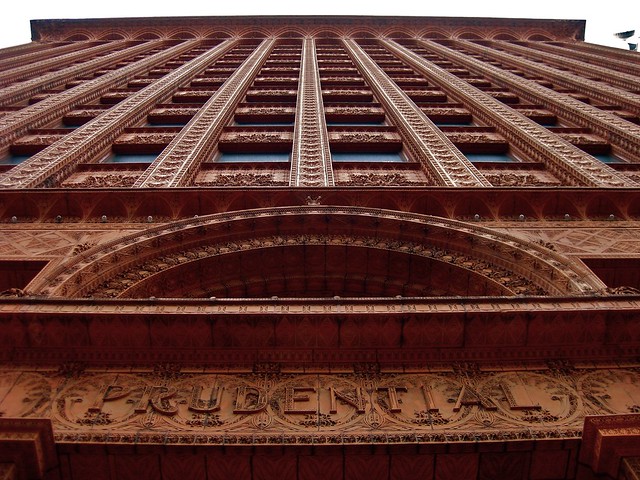
The Reliance building and Family Roots


picture two: http://niels85.files.wordpress.com/2011/07/the-reliance.jpg
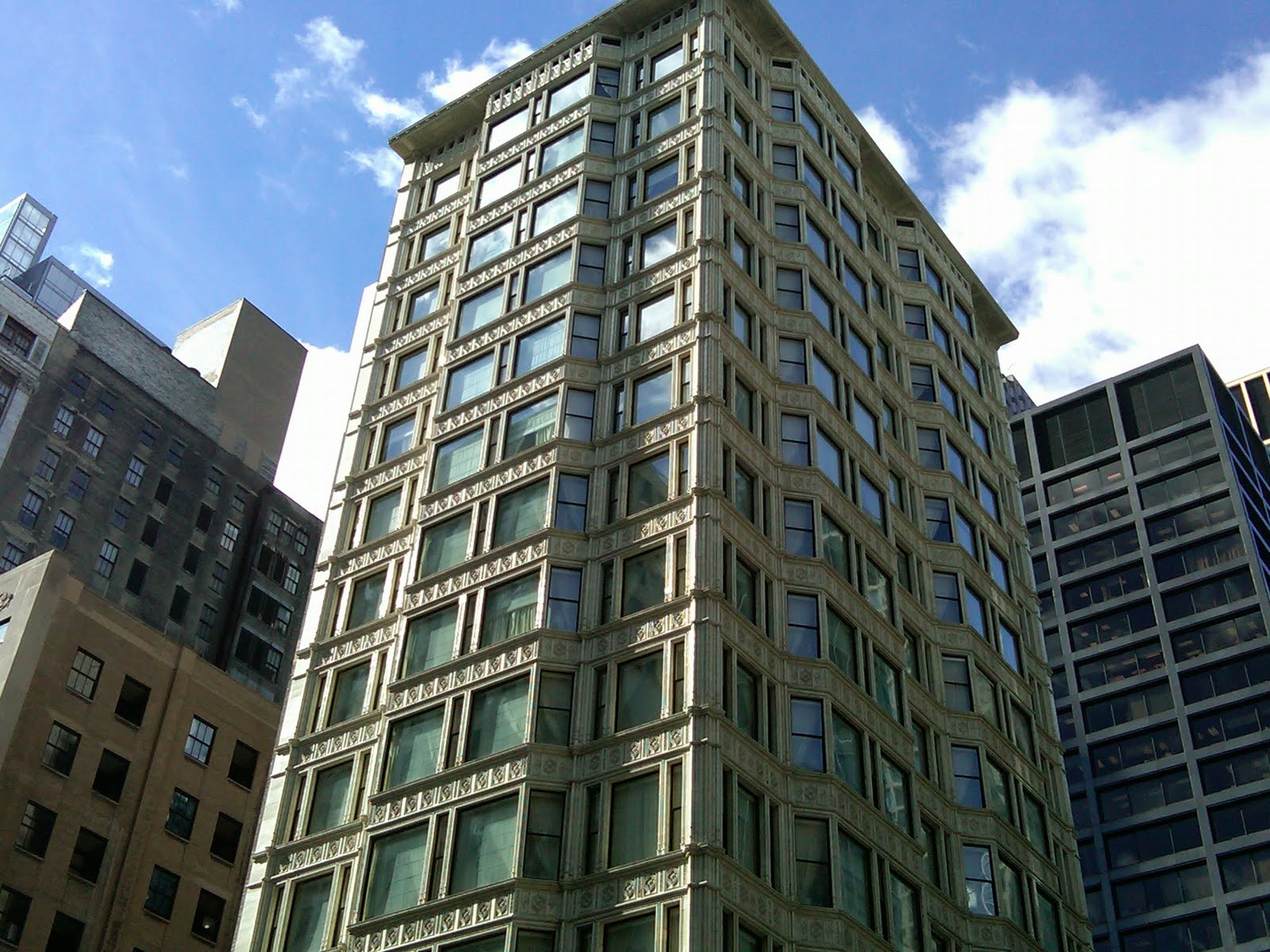
picture three: http://www.arcspace.com/travel/burnham/1burnham.jpg

Wednesday, April 4, 2012
The old Styles keep comming back!
In my senior year of high school I was out shopping with my
mom and I pulled a jacket off the rack and as my mother looked at it she said, “I
had one just like that when I was in High school.” Revolted, I put the jacket
back. All the styles that were popular when my mom was in High school and
college are now back in style with a bit of an “eco-friendly” modern twist. Clothing is in style, than two years later you
think back and ask “what was I wearing?!” and this cycle keeps on going around
and around. Then eventually we use same ideas over again but slightly changed. We also
do this in design, as we started with the foundations and then as time
progressed people rejected the old ideas adopted the new ones and then returned
to the “old style” with some elements of the “new style”, thus making a whole
new style. Then that reverberations cycle keeps going.

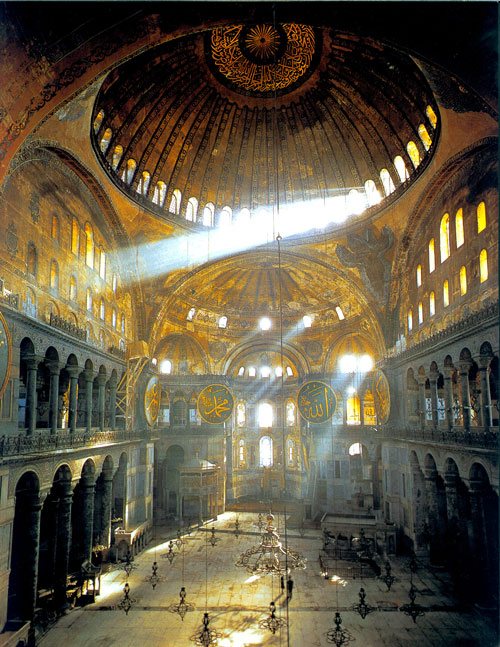 The first week of this unit we talked about the music in
church spaces. Which were just developing from the basilica to the first stages
of the church, with the high ceiling and high windows to let the most sunlight
in. Also the expression of stories on colored glass and the building being made
of stone. Now music was present in this
space, like Hagia Sophia and in other worship spaces around the known world. We
talked about the rhythm and balance of poems and music and related that back to
design. Then we moved in the “dark ages” or the medieval time period. Huge
churches that were the early cathedrals were built all over France and England.
The first week of this unit we talked about the music in
church spaces. Which were just developing from the basilica to the first stages
of the church, with the high ceiling and high windows to let the most sunlight
in. Also the expression of stories on colored glass and the building being made
of stone. Now music was present in this
space, like Hagia Sophia and in other worship spaces around the known world. We
talked about the rhythm and balance of poems and music and related that back to
design. Then we moved in the “dark ages” or the medieval time period. Huge
churches that were the early cathedrals were built all over France and England.
Then as the cycle goes people stopped using the Gothic style
and move on to the new change the enlightenment. Where more spaces changed to
places where people would share idea and bring about the reform.
People began to write rules down and we began to build on
what we saw and understood but also so we can help the feature understand what
was being designed during that time, which led to the Rule books.
The western Rule book of design: 1. Revive the past using
the classical language, 2. Strive for harmony and order in all things, 3. Layer
groves and stacks whenever possible. 4 emphasize surface thorough material.5.
Follow the rules 6. Place man at the center 7. Strive for position through patronage.
8. Move towards the secular 9. Get some perspective and 10 expand your physical
world.
But at the same time in the east they were making their own
rule book. 1. Maintain continuity w/ the past 2. Strive for harmony in all
things. 3. Continuing the laying of groves and stacks. 4. Surface and Materiality
5, Follow the Rules 6. Place community before self. 7. Strive for position through
patronage. 8. Embrace spiritual just not religious 9. Sustain systems for
representations and 10. Expand you inner world.
Then almost immediately after these rules are made then
people begin to break them. Bending the rules, breaking some like making wavy
stare cases but still have different materials in sections. Though this is all happening the West, the East does not change their style at all.
In western world design changes again, when the world
expands to now include the American colonies. The style becomes extremely simple
and buildings are made out of all wood and no stone at first. Like the Parson
Capen house.
America is forming we
are copying many buildings from Europe and England. For example the states were making their
state capitol buildings look Greek but the National government was vary Roman, making
the Federalist style. Then as industry is
invented the design world changes again drastically. They begin to use glass in
excess and make buildings taller and stronger. People being to have green
houses at their homes, windows got much bigger and this led to many designs for
the world fairs that start the next unit.
 This whole unit is about how the ideas founded in the first
unit are recycled and then recycled again. As we were connected to the whole
world in the first unit we are still connected to the whole world at the end of
this unit but not through the whole unit. This is just shows that we all
interact with the whole world and then step back and then go back to
interacting again, just like ripples on a pond.
This whole unit is about how the ideas founded in the first
unit are recycled and then recycled again. As we were connected to the whole
world in the first unit we are still connected to the whole world at the end of
this unit but not through the whole unit. This is just shows that we all
interact with the whole world and then step back and then go back to
interacting again, just like ripples on a pond.
Hagia Sophia: http://www.teslasociety.com/pictures/Roman%20Empire%20Images/RomanEmpire2.jpg
church: https://blogger.googleusercontent.com/img/b/R29vZ2xl/AVvXsEjNrLI5Z4hxaQF2oQf_2GfOzuUnqv6Vi5mPa0U6NyjgWS5lGE70ND9Uxn1NcxPMXUbFqXJIvzauEy0_IiQxCsQHWwzSXNg-EVvq2J8NuevGZAV8ZjRJAg9-6Da9iod3E3j6Je3FcoFhdFhH/s1600/402990794_ddbaa43e45.jpg
Last picture: http://www.dougdemercurio.com/wp-content/uploads/2010/09/ripples-in-pond.jpg
Monday, April 2, 2012
Eco-Friendly


 Today people are drawn to the idea of "Eco-friendly" design and modern innovation. Especially when it comes to their homes, and every other year on the national mall there is the Solar Decathlon were 20 Colleges and University design "Eco-Friendly" houses. People are attracted to this style because it is apart of our culture today to be less harmful to the environment. Houses like the Virginia Tech house has all the looks of a modern eco-house but still has all elements of a regular home.
 In today's world environmentally friendly is how we are improving the quality of living just as people were doing in the early 1900's. They wanted to use new sciences of their time and the new technologies to improve the quality of living. They were working so hard to be modern because they were trying to establish who they were in the world. America was working so hard to be recognized as just as powerful as England. We wanted to make our own place in this new world of science and technology.
Picture one: http://inhabitat.com/wp-content/blogs.dir/1/files/2010/06/SD-Europe-Winner-Lumenhaus-18.jpg
Picture two: http://www.vtnews.vt.edu/articles/2011/10/images/M_102511-unirel-solarhouseday.JPG
Picture Three: http://globalwarming.house.gov/files/PHOTO/SolarDecathlon/universityOfvirginia.jpg
Form Follows Function

Picture Bottom left : http://www2.gsu.edu/~wwwher/courses/8690/home/1.jpg

Picture Bottom Right: http://farm3.staticflickr.com/2443/3547302451_3e6473e44c_z.jpg

Subscribe to:
Posts (Atom)